

Os Anjos Cantam
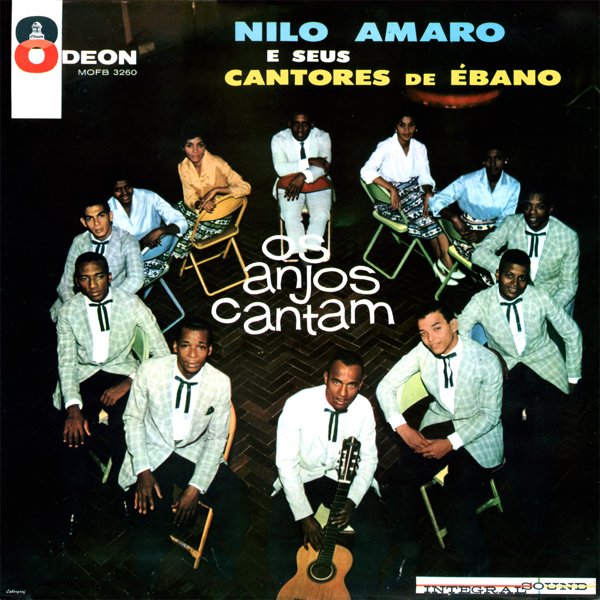
In “Os Anjos Cantam,” the Black voice is a statement of ancestry, collectiveness, and grandeur. A group that has incorporated the aesthetics of spirituals (the music created by America’s Southern enslaved people) into Brazilian music, Nilo Amaro e Seus Cantores de Ébano shines bright in this album. If, on the one hand, the album could be labeled as minimalist for its parsimonious arrangements and near absence of instruments, the plethora of voices giving contour to “Os Anjos Cantam,” on the other, fill every and all “empty” spaces. Of the voices composing the Black choir of “Cantadores de Ébano,” the petrifying lows of Noriel Vilela are a highlight. While Vilela’s low is noticed in most of the tracks, it is particularly touching in the sensual and mysterious “A Lenda do Abaeté,” which paints a scene of the Abaeté lagoon in Bahia’s Salvador. There is a beautiful contrast between lows, highs, and mediums in “Leva Eu Sodade,” one of the most famous songs interpreted by the group. One of the only songs that feature an instrument other than voices is “A Minha Graúna,” a lovely homage to Brazil’s Northeastern countryside universe, where the harmonica plays a discrete, but indispensable role.