
Free Jazz Orchestras

The Owner of the River Bank cover

The Owner of the River Bank

Cecil Taylor, Italian Instabile Orchestra
The Hearinga Suite cover

The Hearinga Suite

Muhal Richard Abrams
Baden-Baden '75 cover

Baden-Baden '75

Globe Unity Orchestra
Erta Ale cover

Erta Ale

Paal Nilssen-Love, Large Unit
Communication cover

Communication

Jazz Composer's Orchestra
Seasons cover

Seasons

Alan Silva, Celestrial Communication Orchestra
Crystals cover

Crystals

Sam Rivers
Exit! cover

Exit!

Fire! Orchestra
Actions cover

Actions

Fire! Orchestra
Berlin Skyscraper cover

Berlin Skyscraper

Berlin Skyscraper, Butch Morris
Sunrise in the Tone World cover

Sunrise in the Tone World

The Little Huey Creative Music Orchestra, William Parker

Free jazz seems like a music designed to be performed by small groups. And indeed, it frequently provides a home for even smaller ensembles than those found in more mainstream forms of jazz. Ornette Coleman’s 1959-61 quartet struck a blow by omitting a piano, while Cecil Taylor limited himself to piano, saxophone (played by Jimmy Lyons) and drums (first Sunny Murray, then Andrew Cyrille) for years. Anthony Braxton’s first quartet consisted of himself, trumpeter Wadada Leo Smith, violinist Leroy Jenkins, and drummer Steve McCall. Peter Brötzmann famously led a bassless trio with pianist Fred Van Hove and drummer Han Bennink, too. There have been countless duo albums, and even solo releases, in the annals of free jazz. But the opposite is also true. There is also a long history of large — sometimes very large — ensemble works within the free/out idiom.

The seeming contradiction of the “free jazz orchestra” is what gives its music such power. How can one ask eighteen or twenty musicians, each committed to the principle of unfettered, highly individualistic improvisation, to work together with the discipline necessary to create something coherent? These works are often written out (though there’s plenty of solo space allotted), but still kept loose enough that a kind of mosaic-like group identity emerges. And when it works, free jazz orchestra music can be a kind of magic trick. 

The discipline of big band jazz is essential to its power. Whether it’s the lushness of Duke Ellington’s classic 1950s recordings, the dance-commanding pulse of Count Basie’s 1930s bands, the high energy and modernism of Woody Herman’s 1940s Herd, or any other swinging group of the mid-20th century, when the form was at its peak, traditional big band jazz is about moving as one. The solos are nice, but the charts are the thing.

Free jazz, meanwhile, is about breaking those fetters. Pulse drumming instead of a hard, swinging beat; lengthy solos instead of punchy melodies; ragged arrangements instead of tightly rehearsed charts. Make no mistake, free jazz can offer strong melodies (Ornette Coleman had an instantly recognizable style and an undeniable talent for hooks, and John Coltrane, Anthony Braxton, Pharoah Sanders and Albert Ayler all had memorable tunes), but the focus is often on a single player expressing themselves rather than a group marching forward in lockstep.  

That said, even the most iconoclastic and singular voices in the jazz avant-garde seemed to relish the opportunity to paint on a broad canvas. Cecil Taylor’s large ensemble work is some of his most exciting music, and late in life he convened a big band for an annual NYC residency that spanned close to a decade, though none of the recordings have ever been released.

The albums discussed here are some of the most unique and powerful in all of free jazz, precisely because they succeed in bridging the gap between unfettered improvisation and the sweeping power of an orchestra in full flight. 

(Note: We’re leaving the Sun Ra Arkestra out of this discussion, because Sun Ra is a separate subject, always.)

Phil Freeman

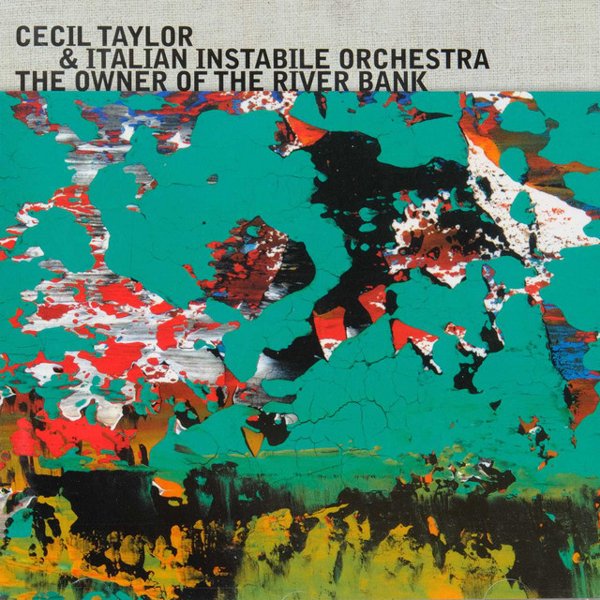
The Owner of the River Bank

Cecil Taylor, Italian Instabile Orchestra
The Owner of the River Bank cover

In September 2000, Cecil Taylor spent nearly a week with the the Italian Instabile Orchestra, a 17-member group that had brought him in to celebrate their tenth anniversary as a unit. Because they were an existing group with their own methods and philosophy, rather than an ad hoc conclave of individual players, The Owner Of The River Bank is different from any other large ensemble Taylor work. For one thing, Instabile already had their own pianist, Umberto Petrin, who took part in the performance — there’s even a four-handed passage at one point, both players echoing and mirroring each other beautifully. Recognizably Taylor-esque melodies and collective chants are heard, but the music has the density of big band charts, punctuated by frequent orchestral flourishes. The drums and tympani roll like thunder. There are few solos; instead, groups of horns call back and forth to one another, and Taylor anchors the music without dominating it. It’s a striking achievement, a concerto that sounds like nothing else in Taylor’s catalog while remaining unmistakably his work.

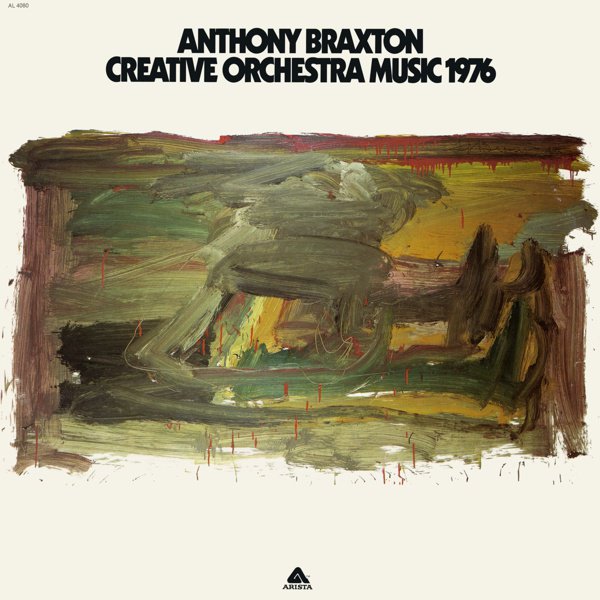
Creative Orchestra Music 1976

Anthony Braxton
Creative Orchestra Music 1976 cover

In 1974, Anthony Braxton signed with Arista Records. That a major label would take a chance on one of America’s most avant-garde jazz composers was a surprise to many, but he took full advantage of the resources that had been granted him, following up two albums of knotty but compelling small group music with this sprawling opus. The ensemble included AACM peers like saxophonist Roscoe Mitchell, trumpeter Wadada Leo Smith, and pianist Muhal Richard Abrams, as well as synth player Richard Teitelbaum, composer Frederic Rzewski on piano and a phalanx of horns — 22 musicians in all. The music is extremely varied, from the Ellington-esque opener, “W-138,” to the abstract, almost ambient soundscapes of “G-10-K” and “O NB-12” to “22-M,” which starts off as a fairly straight-seeming John Philip Sousa-style march before Wadada Leo Smith bursts out of the pack to take a piercing, squalling trumpet solo, as the horns pulse behind him in a manner that nods to Charles Mingus. This is the place to start if you really want to appreciate Anthony Braxton as a composer and arranger.

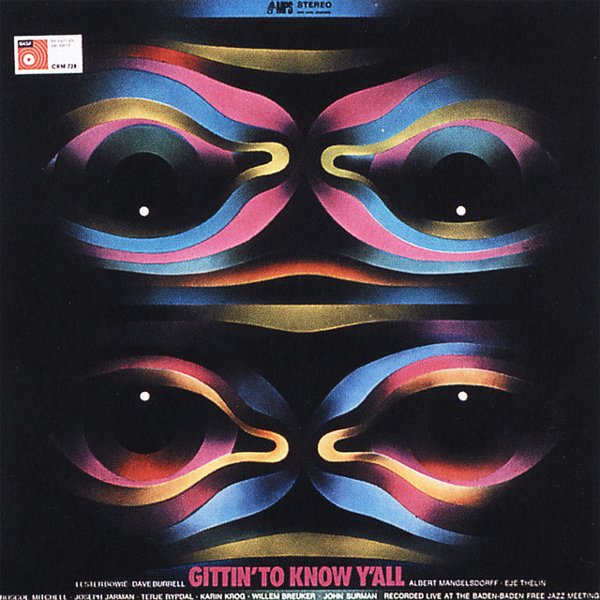
Gittin' to Know Y'all

Various Artists
Gittin' to Know Y'all cover

Art Ensemble of Chicago trumpeter Lester Bowie assembled the Baden-Baden Free Jazz Orchestra for a performance at the Baden-Baden Free Jazz Meeting in 1969. The lineup included saxophonists Roscoe Mitchell and Joseph Jarman, pianist Dave Burrell, and drummer Steve McCall, alongside a slew of Europeans: trombonist Albert Mangelsdorff, guitarist Terje Rypdal, drummer Tony Oxley, and about a dozen others. The half-hour piece they performed, split across two sides of this LP, builds slowly, drifting in on long tones from the 12 horns and Rypdal’s guitar, with two pianos (Burrell and Leo Cuypers) heard in either side of the stereo field and bassists Barre Phillips and Palle Danielsson droning ominously as three drummers (McCall, Oxley, and Claude Delcloo) summon the thunder. Eventually, it becomes a storm of sound that occasionally settles down to let one instrument or another seize the spotlight, and Bowie at one point offers hoarsely declaimed poetry. This album has been somewhat forgotten over the 50+ years since it was recorded, but it’s a major document of an early summit meeting between American and European improvisers.

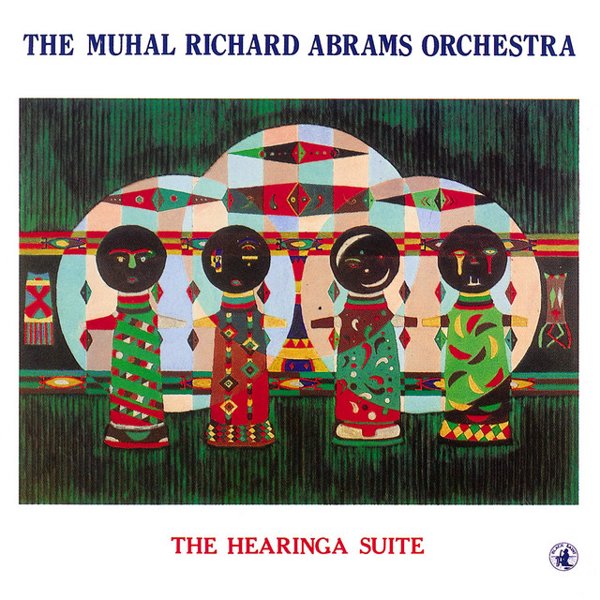
The Hearinga Suite

Muhal Richard Abrams
The Hearinga Suite cover

Pianist and AACM founder Muhal Richard Abrams recorded this album in 1989 with an 18-piece ensemble that included four trumpets, four trombones, five reeds, cello, bass, glockenspiel and drums. It’s a fascinatingly varied record; while the opening “Hearinga” is a lush big band piece, the second track, “Conversations With The Three Of Me,” starts out as romantic solo piano before lurching sideways into a very late ’80s synth exercise featuring the sampled sound of water sloshing and fake digital marimbas; it could be one of Frank Zappa’s Synclavier experiments. The synths return midway through “Aura Of Thought – Things,” and it’s as if the Residents have stormed the stage midway through a big band concert. When Abrams and his orchestra stay in the realm of acoustic jazz, though, the music is beautiful and hypnotic. Abrams’ writing is astonishingly detailed and dramatic, weaving horn lines around each other as percussion instruments ping and rattle. The sweeping, romantic “Oldfotalk” opens with an unaccompanied trumpet solo that’s absolutely majestic, and the way the band comes in will take your breath away.

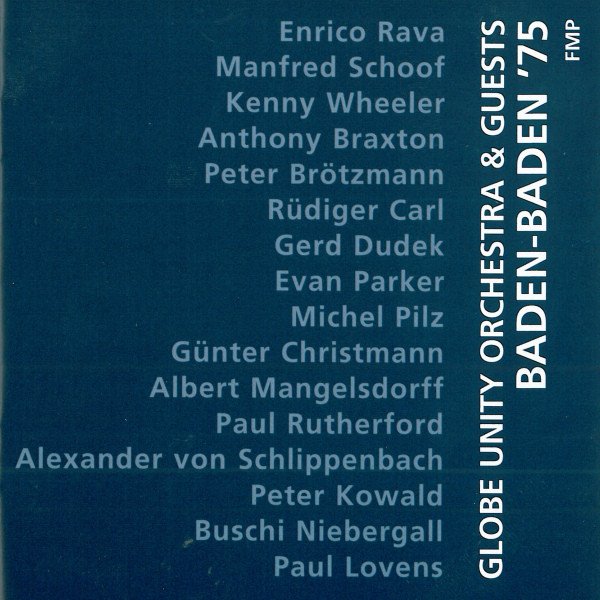
Baden-Baden '75

Globe Unity Orchestra
Baden-Baden '75 cover

Pianist Alexander von Schlippenbach conceived of the Globe Unity Orchestra in 1966, combining Gunter Hampel’s quartet, Peter Brötzmann’s trio, and Manfred Schoof’s quintet into one large ensemble. Over the years, membership fluctuated, but the group developed a strong collective identity and became Europe’s greatest free big band. In 1975, they invited two guests to join and provide one composition each for a studio recording session. Italian trumpeter Enrico Rava’s “Marañao” opens this album, a squalling, convulsive fanfare that eventually gives way to what sounds like Carnival parade music. That’s followed by Anthony Braxton’s “U-487,” a nearly 19-minute piece with a marching rhythm and tons of clattering percussion from drummer Paul Lovens. The other three pieces, “Jahrmarkt,” “Hanebüchen,” and “The Forge,” are composed by bassist Peter Kowald or von Schlippenbach, and feel much less structured, with plenty of room for solo eruptions and multi-horn blare, which makes the sudden, all-too-brief appearances of almost Ellingtonian harmony (plus accordion) on “Jahrmarket” all the more shocking.

Alms/Tiergarten (Spree)

Cecil Taylor
Alms/Tiergarten (Spree) cover

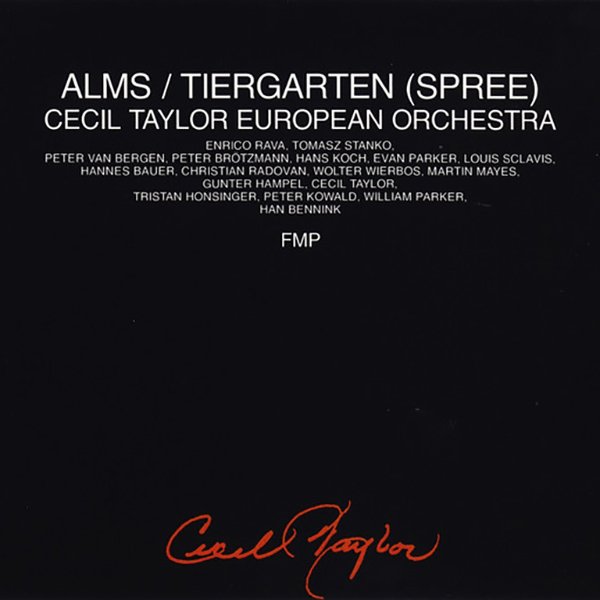
Cecil Taylor’s Berlin residency of June/July 1988 found him seeking connection with an array of European improvisers and free jazz players. He brought 16 of the continent’s best and most forward-looking musicians together, rehearsing them for a week straight before presenting this concert, which consisted of two hour-long pieces, “Involution/Evolution” and “Weight – Breath – Sounding Trees.” Although most of the extended running time of each piece is given over to lengthy solos from Enrico Rava, Tomasz Stanko, Peter Brötzmann, Evan Parker, and drummer Han Bennink, among others, the fanfare-like melodies the ensemble plays as punctuation and section divisions are pure Cecil. The leader mostly stays at the center of the music, letting the horns swirl around him and engaging periodically with dual bassists Peter Kowald and William Parker, as vibraphonist Gunter Hampel adds extra ringing tones to the mix. Best heard with an intermission of at least 15 minutes between pieces; two straight hours of this will be too much for most constitutions. Still, it’s one of the greatest examples of musical maximalism ever laid to tape.

Erta Ale

Paal Nilssen-Love, Large Unit
Erta Ale cover

Despite its name, drummer Paal Nilssen-Love’s Large Unit was relatively compact for a free jazz orchestra, numbering just 11 players including the leader on this 3CD set. It included three brass players (cornet/flugelhorn, trombone, and tuba) and two saxophonists, plus electric guitar, turntable and electronics, and a double rhythm section: two bassists, two drummers. On later releases the group swelled to 15 members, and on one memorable occasion – a collaboration with the Ethiopian group Fendika, with special guest guitarist Terrie Ex – there were 22 people onstage. This set consists of two CDs mixing studio and live material, and a bonus disc documenting a full performance from the Moers Festival. It’s three hours of music in all, and it varies from stomping, romping mass blare to a quiet duet for bass and electronics. You get multiple versions of several compositions so you can compare and contrast, and four versions of a collective improv exercise called “Round About Nothing” that’s radically different every time, but always provides plenty of space for the drummers to go wild.

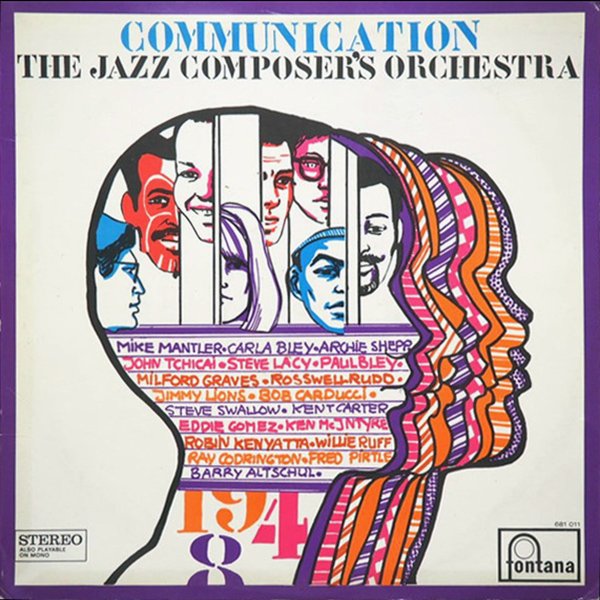
Communication

Jazz Composer's Orchestra
Communication cover

The Jazz Composers Orchestra, led by trumpeter/composer Michael Mantler and his then-wife, pianist Carla Bley, was an outgrowth of the Jazz Composers Guild, an organization founded by Bill Dixon, Cecil Taylor, Archie Shepp, Sun Ra and others. The Guild collapsed after less than a year, but the JCOA stayed together, providing a platform for Mantler’s compositions to be recorded and performed by the cream of NYC’s avant-jazz community. This 1968 double LP, released on their own JCOA label but later licensed to ECM, features almost 40 musicians in all, though the personnel varies somewhat from track to track. Each piece is a showcase for a soloist backed by the orchestra — the featured artists include trumpeter Don Cherry, tenor saxophonists Gato Barbieri and Pharoah Sanders, guitarist Larry Coryell, bassist Steve Swallow, trombonist Roswell Rudd, and for the entire second LP, Cecil Taylor. “Communications #11” is a nearly 35-minute concerto for piano and free jazz orchestra, and it’s overwhelming in the best possible way, a tour de force performance by Taylor and the ensemble.

Seasons

Alan Silva, Celestrial Communication Orchestra
Seasons cover

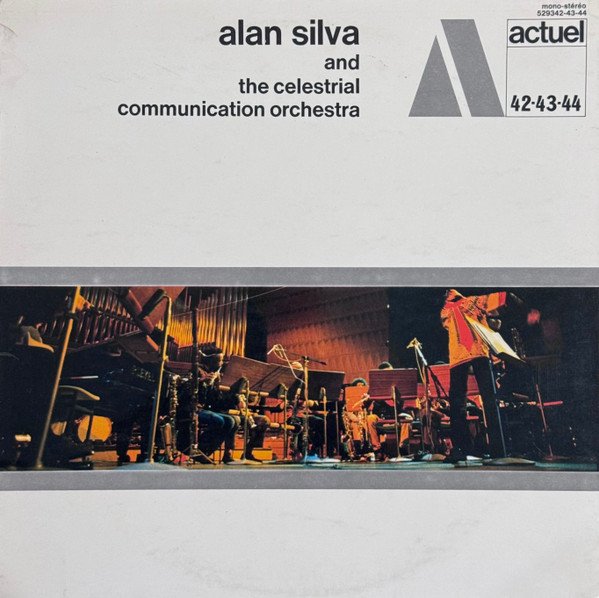
On December 29, 1970, bassist Alan Silva assembled more than 20 musicians in the ORTF studio in Paris to record his composition “Seasons,” which was so sprawling and massive it required a triple LP set to contain it. The BYG-Actuel label obliged, and this has long been regarded as a landmark out-jazz release. The Celestrial Communication Orchestra included all the members of the Art Ensemble of Chicago; soprano saxophonist Steve Lacy and his band; pianists Bobby Few, Dave Burrell, and Joachim Kühn; trumpeter Alan Shorter; cellist Kent Carter; electric viola player Jouk Minor; and more. Silva himself plays electric violin and electroacoustic instruments in addition to bass, adding eerie and futuristic sounds to the mix. The piece has a kind of continuous flow over its two and a half hour running time; there’s a complex chart inside the packaging that tells you more or less who’s doing what, when, but it’s best experienced like bobbing in an ocean of sound, occasionally letting it drag you under before breaking through the surface again, gasping for air and paddling furiously.

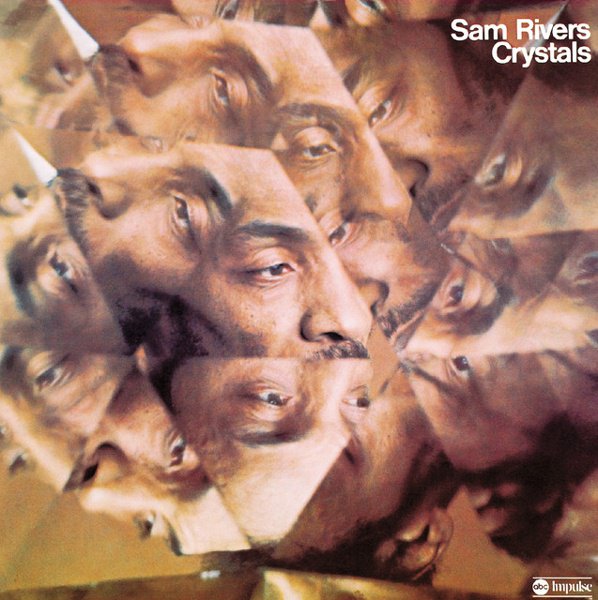
Crystals

Sam Rivers
Crystals cover

There are only about 15 musicians actually heard on Crystals, but more than 60 are credited in the liner notes, because saxophonist and composer Sam Rivers wanted to acknowledge everyone who played at rehearsals and helped shape the music. The band on the final album included three trumpets, three trombones (with Joe Daley doubling on tuba), five saxophones (plus clarinets and flutes), an acoustic and an electric bassist, and two drummers. The six compositions were written between 1959 and 1972, with Rivers chipping away at them slowly until he was satisfied. The result is a tight, densely orchestrated big band album propelled by a churning double rhythm team (and not anchored by a piano), with the horns surging and spitting fire, and soloists going all the way off. Some pieces are more traditionally “jazzy” than others; while “Tranquility” is anchored by a thick funk groove, “Bursts” swings hard. When it first came out in 1974, this album was released in quadrophonic sound, and it would probably be amazing on a surround system. But even in plain old stereo, it’ll blow your hair back.

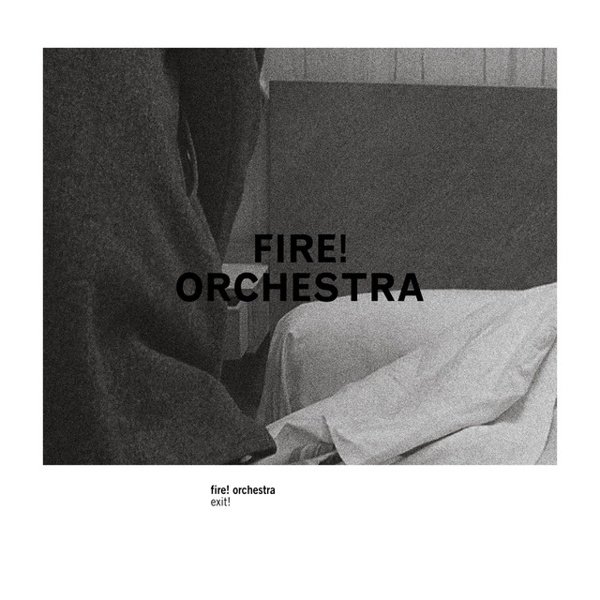
Exit!

Fire! Orchestra
Exit! cover

Mats Gustafsson’s trio Fire! features saxophone, electric bass and drums and delivers stripped-down, hard-riffing punk jazz. The expanded version dubbed Fire! Orchestra is… the opposite of that. On this, their 2013 debut release, they are 28 members strong, pulling from the Scandinavian free jazz, avant-noise and underground rock scenes (among the four drummers is the late Thomas Mera Gartz of Swedish psych-trance legends Träd, Gräs och Stenar). The 45-minute piece they perform, recorded on Friday the 13th 2012 and spread across two LP sides, is a big, throbbing vamp – in addition to the aforementioned drummers, they had four bassists and four guitarists, baritone and bass saxophones, bass clarinet and tuba – with frequent Greek-chorus outbursts from an array of brass players and intense, caterwauling vocals from Mariam Wallentin and Sofia Jernberg. This is a sprawling jazz-rock experiment that will remind some listeners of early 1970s work by Carla Bley, or the one-off fusion big band Centipede. And it’s only the beginning of the Fire! Orchestra journey – they’ve made several more equally impressive albums since.

Actions

Fire! Orchestra
Actions cover

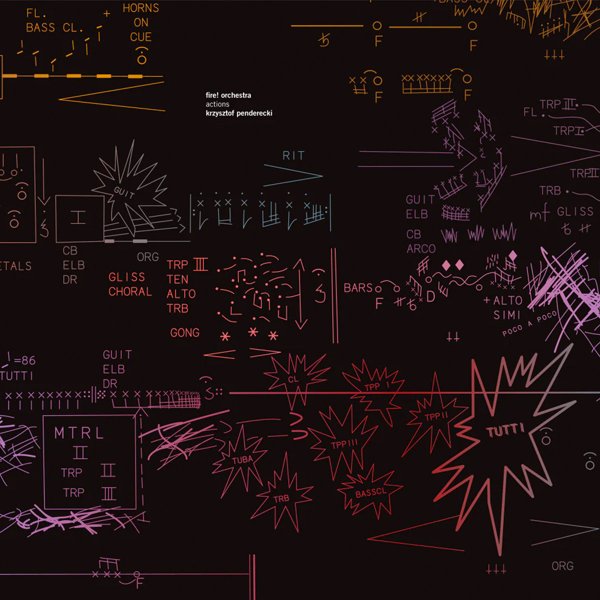
This album documents a 1971 live performance by Don Cherry’s New Eternal Rhythm Orchestra, a 14- or 15-member ensemble that included Cherry on pocket trumpet, his then-wife Moki Cherry on tambura, and a slew of high-profile European out-jazz players including Peter Brötzmann, Fred Van Hove, Willem Breuker, Albert Mangelsdorff, Manfred Schoof, Kenny Wheeler, Tomasz Stanko, and Han Bennink, among others. The opening piece, “Humus – The Life Exploring Force,” is a medley or suite of Cherry compositions that incorporates elements of blues, raga, squalling free jazz, and unhinged vocals from Loes MacGillycutty. That’s followed by a short track, “Sita Rama Encores,” on which Cherry coaches the audience into singing along with an Indian scale before the ensemble erupts again. But the most important piece here is “Actions For Free Jazz Orchestra,” conducted by Penderecki. The ensemble plays (from scores) themes written by the composer, which serve as framing devices for solos. It’s a dark and moody work, sometimes swinging and sometimes raucous and full of life, and although it breaks down at times, it’s a fascinating cross-genre exploration.

17 Musicians in Search of a Sound: Darfur

Bill Dixon
17 Musicians in Search of a Sound: Darfur cover

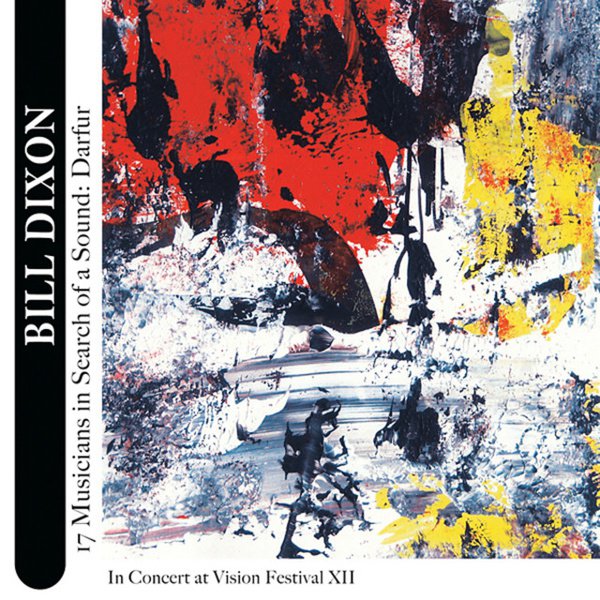
At the 2007 Vision Festival, trumpeter and composer Bill Dixon mustered an ensemble of 17 musicians (including himself) that included seven brass players, six reeds players, bass, cello, and two percussionists playing everything from jazz drum kits to tympani and vibraphone. They played a single hour-long work divided into 13 sections, some of which were themselves divided into multiple parts (“Contour One,” “Contour Two,” “Contour Three,” “Pentimento” I through IV) with the nearly 24-minute “Sinopia” serving as centerpiece. Dixon’s compositional voice is all over this program – he favors low-end instruments, so we get tuba, bassoon, bass and contrabass clarinets, baritone and bass saxophones, upright bass and cello. Those are countered by three cornet and flugelhorn players, and two tenor trombonists, plus Dixon’s own trumpet, pushed through electronic effects. There are relatively few solos, though; this is an ensemble work, full of crescendos and shimmering clouds of harmony. Working at this scale requires funding, which is rarely available, so this is the only example of truly orchestral work from Dixon, but the hallmarks of his style are present every thrilling minute.

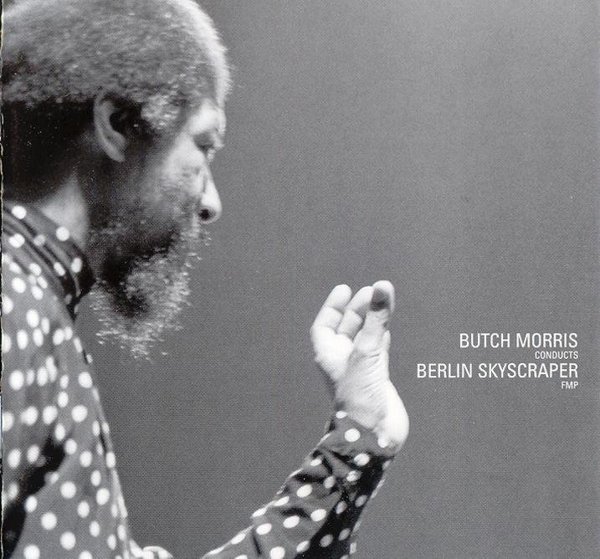
Berlin Skyscraper

Berlin Skyscraper, Butch Morris
Berlin Skyscraper cover

Lawrence D. “Butch” Morris was a cornet player who worked with David Murray, Frank Lowe and Billy Bang, but his primary creative tool was conduction, a method of guiding and shaping collective improvisation via baton and hand gestures. This lengthy double CD, recorded in November 1995, places a 17-member ensemble of European jazz and classical players under Morris’s baton, and the music he and they create together is uncanny, unclassifiable, and unforgettable. What becomes apparent the more you listen is how total Morris’s vision is. There is never a moment of hesitation to this music – he knows what he wants, and what he can get from this combination of instruments (horns, strings, prepared-sounding piano, harp, vibes, percussion), and he brings them up and down, one player or section at a time, placing them in coversation with each other until the result is a thrilling blend of modern classical, avant-garde jazz, and pure joyful experiments in sound. Butch Morris’s methods were unique, and as a result, no one else’s music sounds like this.

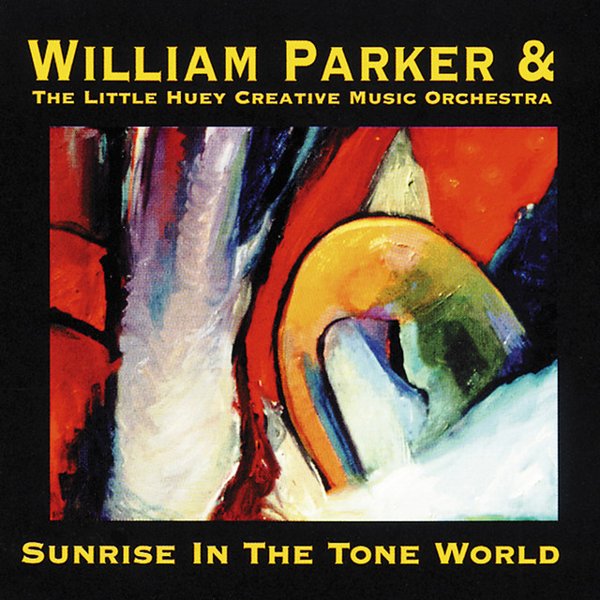
Sunrise in the Tone World

The Little Huey Creative Music Orchestra, William Parker
Sunrise in the Tone World cover

Bassist and composer William Parker led this ensemble, about two dozen strong with special guests bobbing up here and there, through residencies at the Knitting Factory in the mid ’90s; the eight performances on this double CD, adding up to two hours of music, were all recorded in January and February 1995. The band includes three trumpets, three trombones, and between 10 and 12 saxophones, plus piano, vibes, cello, bass, tuba and drums, a powerful rhythm engine that gives the music a bottom-heavy strut that recalls both Charles Mingus and Sun Ra. The balance between the blaring horns and Gregg Bendian’s tinkling vibes gives the music a fascinating fragility (and the last track, “The Painter And The Poet,” is a duet between Bendian and saxophonist Marco Eneidi). Vocalist Lisa Sokolov turns up on three tracks, and violinist Jason Kao Hwang appears on the 40-minute(!) “Huey Sees Light Through A Leaf.” As with many large ensemble free jazz recordings, sprawl becomes an issue, but Parker’s orchestrations give the music real form, and everyone is clearly listening, not just blowing.