
“There is no real school of spectral composers,” scholar and composer Julian Anderson once wrote, “rather, certain fundamental problems associated with the state of contemporary music, since at least 1965, have repeatedly provoked composers from widely different backgrounds into searching out some common solutions involving the application of acoustics and psycho-acoustics to composition.” If you’re looking for a helpful definition of spectral music that nonetheless suspends any hints of a ‘genre form,’ Anderson’s quote does the job nicely – spectral music, a tendency in contemporary classical music during the second half of the twentieth century (and beyond), both can and cannot be reduced to a group of composers; it both can and cannot be reduced to a set of research foci, too. A complex, slippery beast, spectral music resists genre, much as there are key historical moments, and movements, within its development.
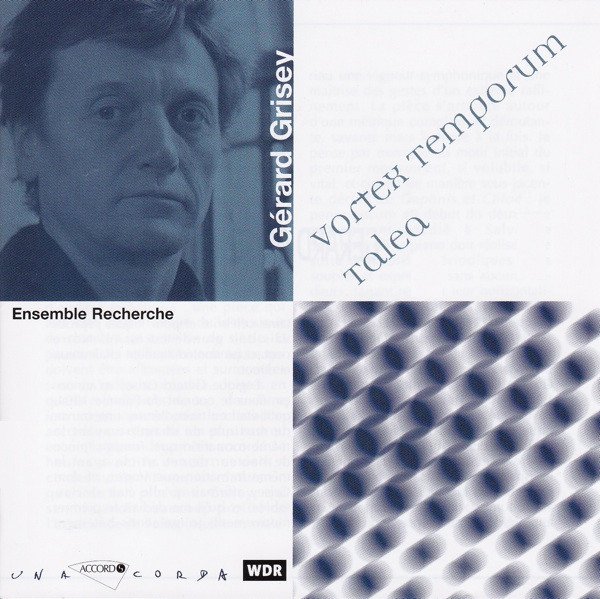
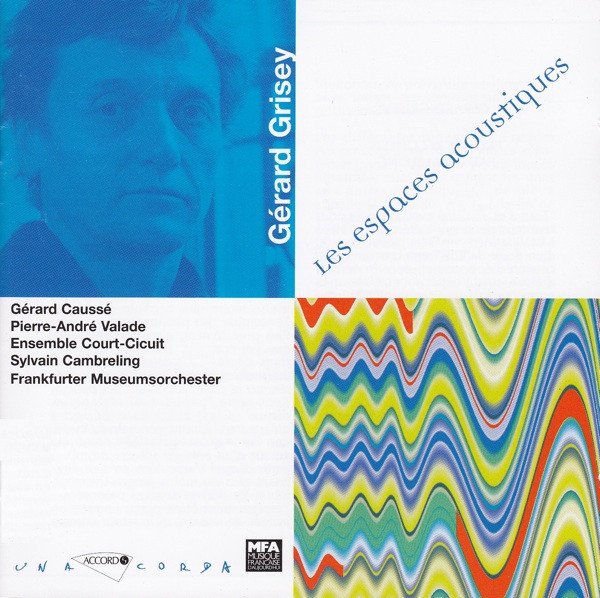
That is to say, spectral music, or spectralism, is relatively easy to pin down conceptually; harder, perhaps, to be perceived solely through listening. That’s not to say you can’t find similarities between the works of composers who’ve come to be known as ‘spectralists,’ but rather that spectral music offers both an approach and an attitude for composers to adopt that could lead them in multiple directions. Gérard Grisey, perhaps the key figure in spectral music, once noted that the genre wasn’t so much a sound or system as “an attitude. It considers sounds, not as dead objects that you can easily and arbitrarily permutate in all directions, but as being like living objects with a birth, lifetime and death.” Thus, the ‘spectral’ in spectral music refers to the use of either harmonic or non-harmonic spectra (represented spectrographically, mathematically, etc.) as part of the compositional process; the acoustic properties of sound thus are core to its existence.
Certainly, then, sound and timbre are the fundaments of spectral music. The ‘movement’ arose as one of several responses to the overbearing and homogenising force of serial music in ‘avant-garde’ classical across the first half of the twentieth century, where compositions were placed in subservience to the structural constraint of serialism. Spectral music wished to undo such dogmatism and instead explore the inner structures and manifold possibilities of sound itself. There are loose ideological parallels with other responses to serialism – say, the minimalists in America, particularly La Monte Young – but spectral music comes at this from a very different angle.
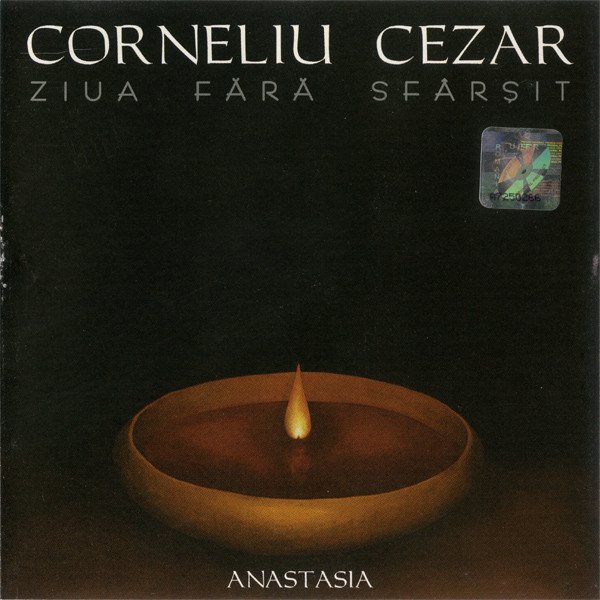
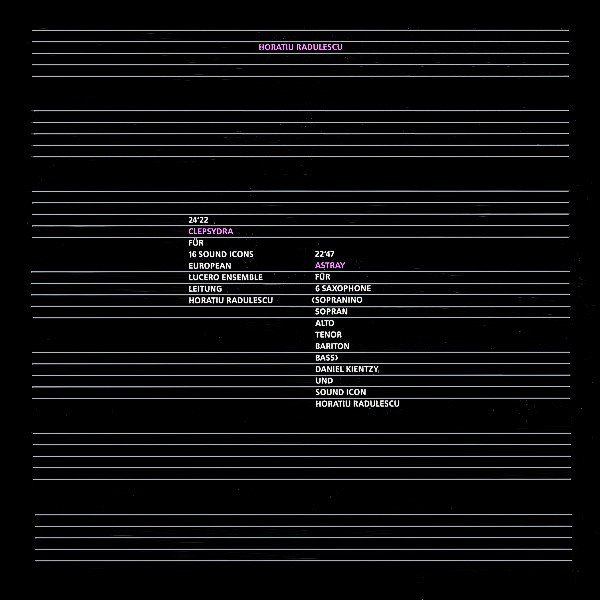
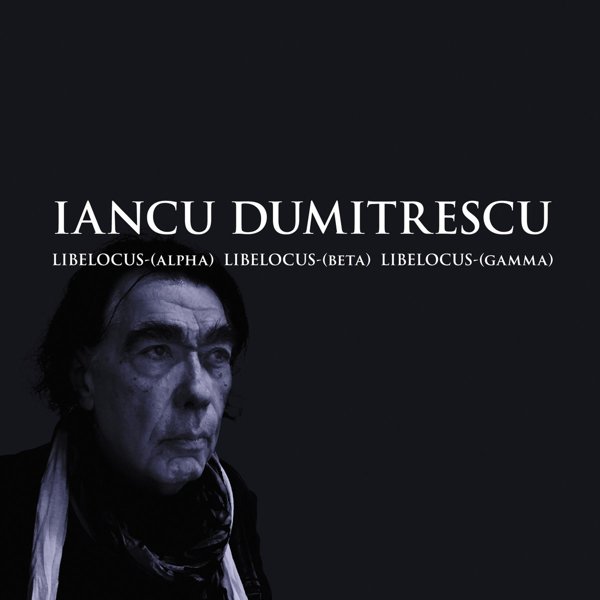
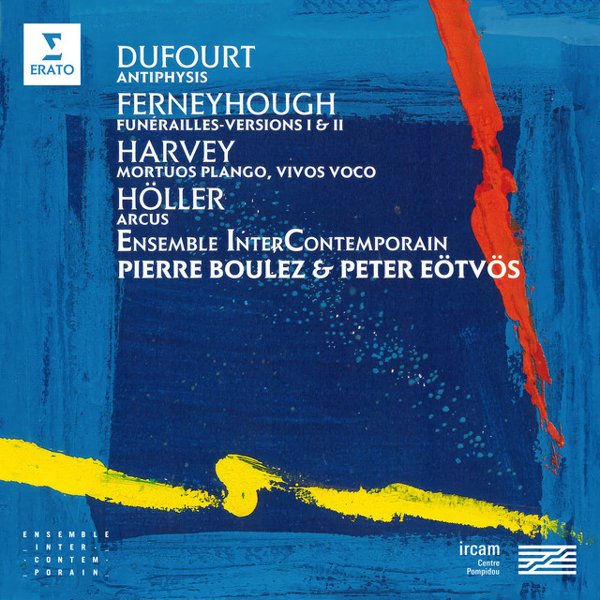
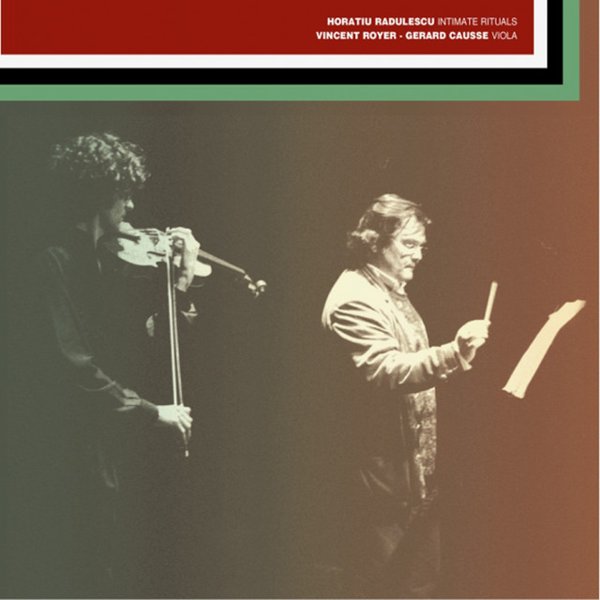
One of the complexities of spectral music is sourcing its beginnings. Critics and scholars tend to label it a phenomenon sparked in France, by the Ensemble L’Itinéraire, with composers such as Gérard Grisey and Tristan Murail its father figures. (Though it was one of their contemporaries, Hugues Dufourt, who introduced the term musique spectrale; Grisey preferred the term ‘liminal music’). There is certainly something to be said for this, as 1970s compositions by Grisey and Murail set many of the parameters for spectral music. However, there were parallel explorations occurring in Romania – contemporaneously through the work of Horațiu Rǎdulescu (who explained spectral music as being devoted to the “deep structure of sound”) and Iancu Dumitrescu, though deeper digging reveals a ‘spectral current’ in Romanian music that goes back to 1960s work by Corneliu Cezar and Octavian Nemescu. Elsewhere, there’s the work of the Feedback Studios group in Cologne – composers such as Johannes Fritsch, Meisas Maiguashca and Rolf Gelhaar.
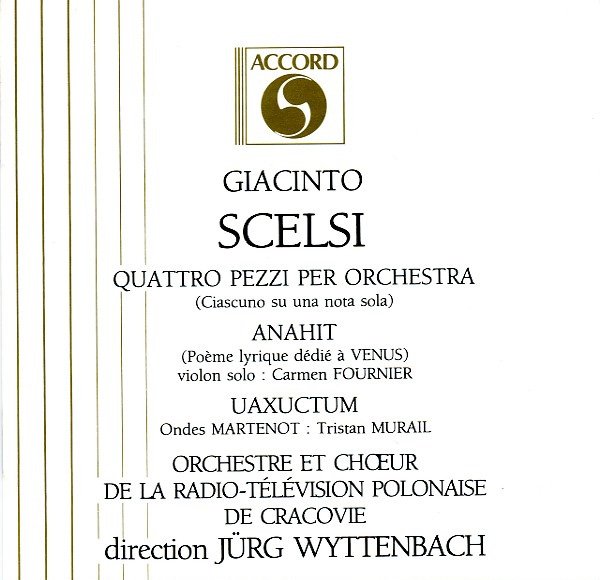
There were also less direct, but no less significant precursors to spectral music. The French spectralist composers had their heads turned by some of Györgi Ligeti’s 1960s compositions, and the spectralists en masse were also inspired, to lesser or greater degree, by aspects of the work of Iannis Xenakis, Karlheinz Stockhausen, Friedrich Cerha, Edgar Varèse (a paternal figure for the French spectralists), Olivier Messiaen, and most importantly, Italian composer Giacinto Scelsi, a spectralist avant la lettre, really. In his excellent primer on spectral music for The Wire, Andy Hamilton also notes the significance of American composer James Tenney, a colleague of the likes of John Cage and Christian Wolff. All this, and yet Anderson proposes that Danish composer Per Nørgard essayed the first true work of ‘spectral music’ with 1968’s Voyage into the Golden Screen.
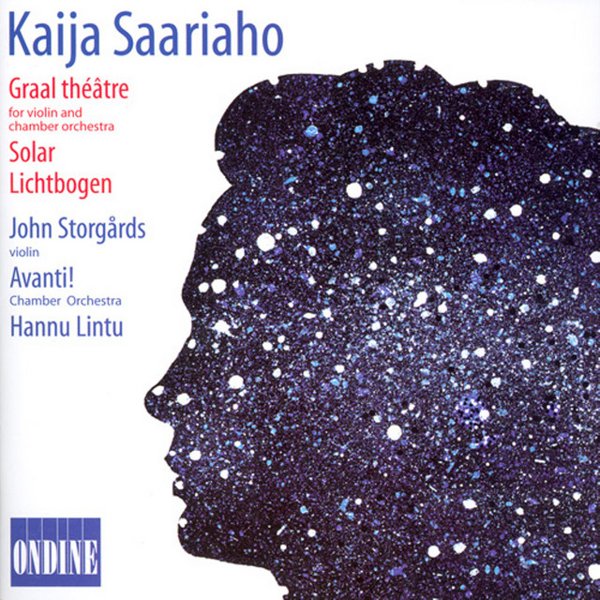
These historical threads are significant; equally important are the ways that spectral composers such as Grisey and Murail influenced and affected generations of future composers. You can hear their work resonating quite clearly in some of the compositions of Finland’s Kaija Saariaho, and English composer Jonathan Harvey – there are also clear connections with the likes of Georg Friedrich Haas, James Dillon, Marc-André Dalbavie, Jean-Luc Hervé, and Magnus Lindberg (whose work moved through various distinct phases, spectral music being only one). In its interest in timbre, in sound itself, spectral music, and the body of compositions that sit, uneasily perhaps, underneath its aegis, share an intoxicating seductiveness, situated at one of the more curious intersections of computer music (through electronic production of sound and /or sound analysis) and acoustic instrumentation; composition that’s rich, attentive to the qualities of sound and timbre, and ofttimes, surprisingly sensuous.